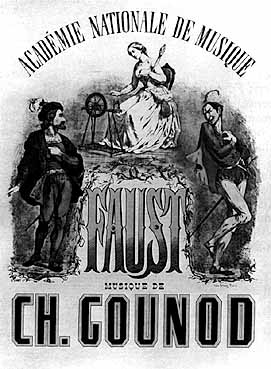
Showing posts with label gounod. Show all posts

May 21, 2011

Ah! Lève toi Soleil!


The Librabry of Congress has put online some Victor recordings from the early XXth century in a section called National Jukebox. The Opera section contains, to date, more than 1000 extracts.


This is indeed a good way to re-discover famous operas and famous names from the past, long since forgotten. In the French section, this includes extracts from


Other Gounod's extracts:

Extracts from Bizet's Les Pêcheurs de Perles:
    And I haven't even started the italian section...

    Feb 3, 2010

    When Gounod meets Corneille


    Start 0'40


    " Source délicieuse "
    Polyeucte
    Charles Gounod

    Nov 14, 2009

    Magdalena Kozena - French Arias


    Because of my mind-blowing experience with Gounod and Minkowski in Paris, I purchased Magdalena Kozena's French Arias, with Marc Minkowski conducting the Mahler Chamber Orchestra (2003).

    It turns out to be a dreamy and delightful immersion into XIXth century French music.


    1. Le Domino noir, " Flamme vengeresse ", Auber
    2. Cinq Mars, " Nuit resplendissante ", Gounod
    3. Roméo et Juliette, "Depuis hier je cherche en vain mon maître ", Gounod
    4. Cléopatre, " J'ai versé le poison ", Massenet
    5. Don Carlos, " Sous ces bois au feuillage immense ", Verdi
    6. Don Carlos, " Au palais des fées ", Verdi
    7. La Damnation de Faust, " Autrefois un roi de Thulé ", Berlioz
    8. L'Heure Espagnole, " Oh! La Pitoyable Aventure! ", Ravel
    9. Don Quichotte, " Lorsque le temps d'amour a fui ", Massenet
    10. Mignon, " Connais-tu le pays? ", Thomas
    11. La Dame blanche, " Chut! Chut! écoutons ", Boieldieu
    12. Sapho, " O ma lyre immortelle ", Gounod
    13. Les Contes d'Hoffmann, " Voyez - la sous son éventail ", Offenbach
    14. Cendrillon, " Ah! que mes soeurs sont heureuses ", Massenet
    15. Carmen, " Les tringles des sistres tintaient ", Bizet


    YouTube extracts (audio only):

    - " Nuit resplendissante ", Cinq-Mars, Charles Gounod
    - " O ma lyre immortelle ", Sapho, Charles Gounod
    - " Les tringles des sistres tintaient ", Carmen, Georges Bizet

    Oct 6, 2009

    Gounod-mania


    Charles Gounod, Philémon et Baucis  

    Que les songes heureux 
    Planant sur votre tête,
    En un divin sommeil,
    Tiennent vos sens charmés.  
    Que vos coeurs restent sourds,  
    Aux voix de la tempête,  
    Dormez.  

    Demain, vous connaîtrez, 
    Quand sur l'azur immense,  
    L'aurore épanchera  
    Ses rayons enflammés,  
    Comment le ciel se venge  
    Et comme il récompense,  
    Dormez.

    Sep 26, 2009

    Mireille ressucitée


    Mireille 

    Opéra en 5 actes de Charles Gounod
    Livret de Michel Carré d'après Frédéric Mistral
    Créé au Théâtre Lyrique le 19 mars 1864
    Entrée au répertoire de l'Opéra de Paris, 14 septembre 2009


    Mireille - Inva Mula
    Vincent - Charles Castronovo
    Ourrias - Franck Ferrari
    Ramon - Alain Vernhes
    Taven - Sylvie Brunet
    Vincenette - Anne-Catherine Gillet
    Andrelou - Sebastien Droy
    Ambroise - Nicolas Cavallier
    Clemence - Amel Brahim-Djelloul
    Le Passeur - Ugo Rabec

    Orchestre et choeurs de l'Opéra de Paris
    Conduction - Marc Minkowski
    Stage direction - Nicolas Joël

    Opéra Garnier Sept.22 performance - gala AROP


    There were certainly some in Paris to boo Nicolas Joël's new production (only on the premiere it seems, as in NY). Nobody followed through in the performance I attended though, not even me, though his lack of ideas and actors direction is the only thing one can think of after seeing his production.

    But Joël's decision to start his 5-yr contract as director of the Paris Opera by staging this particular piece is so commendable - and Minkowski's conduction is so exquisite one can only thank the man. Finally, after too many years of drought, Gounod is back in Paris. Adios Gérard Mortier...

    I can't emphasize enough how extatic I felt when the first notes of the overture emerged and how exquisite the musical execution was. Finally, after too many years of bad treatment - including Plasson's massacre last year in Orange, Gounod's music is fully rehabilitated.

    Who can, after hearing this performance, honestly say Gounod is boring and emotionless? It took Mark Minkowski - a baroque's conductor - to unravel all the marvels of Mireille's score.
    I had truly never heard this opera played so brilliantly - a magnificent interpretation indeed (why he was also booed on the premiere is beyond comprehension).

    And so does it really matter that Joël's staging is unattractive and quite dumb and so desperately true to the libretto ? Not for me.


    Beginning of Act I

    The piece

    Gounod wanted to adapt provensal poet Frédéric Mistral's novel for the lyric stage (he actually composed most of the music while staying in the very places Mistral's story takes place in), but had to adapt to so many demands he ultimately delivered a piece quite different from his original idea.
     The huge pressure he got all his life from opera directors and prima donna meant he constantly had to make concessions and give way.

    For Mireille, Marie Miolan-Carvalho - wife of the Théâtre Lyrique's director and the soprano who would create the role - told Gounod "Surtout, n'est-ce pas, faites brillant, très brillant, brillant" [Make it shiny, shiny, shiny], so he had to cut most of the dramatic scenes and add light and joyful arias for Mireille.

    The score was cut and rewritten again and again after the premiere, and some arias of the original score were lost during the fire of the Opera House.

    The version performed in Paris is the one Reynaldo Hahn assembled in 1939 - the closest to the original version.

    More on this opera:
    - Synopsis - in French


    Alain Vernhes and Inva Mula

     
    The performance

    Apart from the marvellous job Marc Minkowski did, the orchestra had a great night as well.
    The strings were superb, as were the woods and the brass.

    The energy coming from the pit was mind-blowing, but the chorus of the Paris Opera did not deliver nearly as good a performance as the musicians did. The change of the chorus master hasn't succeeded in improving the quality of the ensemble - their unison is always somehow off and terribly unstable.

    The soloist singers on the other hand were overall interesting - and Charles Castronovo, with his dark yet juvenile timbre made a good impression on me as Vincent.

    I was also impressed by Alain Vernhes' Ramon, a rich and colorful voice very expressive, and Anne-Catherine Gillet's Vincenette.

    The weakest main character was Franck Ferrari's Ourrias. The acting was vaudeville-esque and pretentious(and I hate vaudeville at the opera), while the singing was mediocre and not really up to the overall level.

    Inva Mula's French is not really understandable for anybody, but her singing was decent enough not to ruin Minkowski's view of Mireille.

    Overall a great evening for me.


    Further reading 
    - Mireille au palais Garnier,  Formalhaut
    - Oh Mireille, même à Garnier, tu ne vieillis pas

    Sep 16, 2009

    [Mireille review]


    Before anyone asks, I will be attending the Sept.22 performance of Gounod's Mireille at the Paris Opera (Garnier). Obviously no review until then...

    Sep 14, 2009

    Fast fact about Mireille


    Gounod's Mireille, opening tonight at the Paris Opera, is performed in its 1939 version - the one rediscovered and imposed by Reynaldo Hahn. Fascinating how this very name keeps popping up in my world regularly.

    Sep 13, 2008

    Roméo et Juliette, Salzburg 2008


    Opéra de Charles Gounod
    Juliette - Nino Machaidze Roméo - Rolando Villazón Frère Laurent - Mikhail Petrenko Mercutio - Russell Braun Stefano - Cora Burggraaf Le Comte Capulet - Falk Struckmann Tybalt - Juan Francisco Gatell Gertrude - Susanne Resmark Le Duc de Vérone - Christian van Horn Le Comte Paris - Mathias Hausmann Grégorio - Jean-Luc Ballestra Benvolio - Robert Murray Mozarteum Orchestra Salzburg Concert Association of the Vienna State Opera Chorus Yannick Nézet-Séguin, Conductor Stage director - Bartlett Sher, Sets - Michael Yeargan Costumes - Catherine Zuber Lightning - Jennifer Tipton 3SAT broadcast, August 2nd 2008 Numerous pictures of the production taken during the final dress rehearsal on July 28 here. First of all, I don't think musically Roméo et Juliette is nearly as good as Faust or even Polyeucte (which would deserve to be performed regularly if you ask me). I am truly amazed for instance, that nobody except me finds the introduction of the first big aria of Juliette, "Je veux vivre dans ce rêve" to be a total plagiarism of the beginning of the "Ah je ris de me voir si belle" aria in Faust.

    That been said, and to focus on the actual broadcast, I have to say this was a rather frustrating performance. Both the staging, the costumes, sets and lightning were equally boring; as for the cast, I was not impressed by anybody - Nino Machaidze has a huge problem with her French diction, and the rest of the cast was average, as was the chorus, too inarticulate (special mention though to Mikhail Petrenko as Frère Laurent and his beautiful timbre - that, oddly enough, I didn't seem to be sensitive to in the recent Don Carlo in Paris).
    Nino Machaidze & Mikhail Petrenko
    I was extremely disappointed, on the other hand, by Rolando Villazon. Both his stage presence and his singing portrayed Roméo as a predator with bad intentions and that was a disaster for me. Some could argue this perspective is imaginative and brings an new light on the legend of Romeo and Juliette. To me, it's just like portraying Méphistophélès as a nice guy abused by Faust - and I have too much respect for both Shakespeare and Goethe to applause to such an alteration of the essence of their stories. Beyond that, the real problem was his singing; he had difficulties with the high notes and his breathing and failed to produce any nuance and sensitivity. The scenes requiring finesse and commitment were the worse, especially the final scene that was very well-conducted but failed due to his poor performance. The only highlight of the evening - a relative highlight I may immediately add - was the conduction of young Franco-Canadian conductor Yannick Nézet-Séguin. There were true great moments in his vision of the score, but some arias were totally screwed up as well. To be precise, the beginning of the opera was fresh and extremely vibrant - but by the middle of the first act, both the conductor's intentions and the execution by the orchestra faded; things sounded much better again by the middle of Act 2, especially the last aria of the act, "Va! Repose en paix!" which was played with a rare finesse and a very organic fluidity to it. The 2nd scene of Act 3, with Stefano's Tourterelle aria was a failure; some of the most exquisite bars of this opera, the chorus sentences during the duel, "Capulets/Montaigus, race immonde" were very well thought of, but the brass section was at a total lost during that time; the last two acts were globally well-conducted and the final scene was brilliant (except for the singing, as mentioned earlier). YouTube extracts: - Mikhail Petrenko in "Dieu qui fit l'homme à son image" - final scene

    Sep 10, 2008

    2 Roméos, 7 years apart


    A long long time ago, when Serge Dorny was not the director of the Opera de Lyon, this house had a real talent for scouting new singers - since obviously it never has had the budget to hire real stars - except for Natalie Dessay, a native who is willing to sacrifice a little cash for the pleasure of coming home to a city one can only love once one knows it (but that's a whole different story). Furthermore, this house had the intelligence to schedule French masterpieces - after all, where better to promote the French music than in France? (Serge Dorny dismissed that idea as stupid as soon as he arrived here and has never changed his mind since). Anyway, in may 2001, the Opéra de Lyon had put Gounod's Roméo et Juliette on schedule, with a young and still relatively unknown tenor in the part of Roméo, Rolando Villazón. I had never heard of the guy before and I still remember the impact he made on me that night. The voice was light and extremely expressive, and I couldn't help but think of Franco Corelli - the similarities were indeed plethoric.
    Extract of the original program with my comment from 2001 and the exclamation point, proof of my enthusiasm at the time (since I almost never use that punctuation mark).
    This summer, Villazón appeared once again as Roméo, this time in Salzburg, and a performance was broadcast by 3sat, allowing me to watch it. Over the years, his voice has darkened, which is not at all my cup of tea. But the real surprise in Salzburg was how uninspired his acting was. I did not buy the character at all and that poor performance, combined with a rather inexpressive singing, concurred to a huge disappointment. And a serious nostalgia of 2001.

    Aug 29, 2008

    10 mistakes to avoid when planning an innovative staging of Gounod’s Faust

    Staging orientations

    1. Don't make up Faust as an elderly cripple only to rejuvenate him as a flamboyant young man at the end of the act I.
    2. Don't display the catholics' rites too ostentatiously (death of Valentin, church scene, final scene "Christ est ressussité").
    3. Don't make Méphistophélès stand on a wooden barrel for the "Veau d'Or" aria.
    4. Don't portray Valentin provoking Méphistophélès with a crucifix ("C'est une croix" aria).
    5. Jewels aria: no literal or derivative version of a golden/silvery jewels box should appear onstage.
    6. Walpurgis Night: don't show semi-naked women or imitate in any way the Bacchus iconography.
    7. Final scene: don't make Marguerite wear a white immaculate frock, don't tie her with long ropes or chains cemented on the wall and ask her to adopt the position of crucifixion.

    Costumes

    1. Don't dress Méphistophélès in red.
    2. Don't dress Marguerite in any "purity" colours: white, light blue, light pink.
    3. Don't dress the chorus with XIXth century military uniforms.

    Aug 8, 2008

    Faust, Orange


    August 5 performance review


    Nicolas Joël’s staging


    Obviously, Joël’s view on Faust is centered around Marguerite.
    The huge set in the background – a replica of the organ in the Narbonne’s cathedral – was designed to emphasize the church scene at the end of Act 4 where Marguerite seeks refuge feeling guilty after her brother’s death, only to be “welcomed” by Méphistophélès – effectively rushing her to madness, ultimately leading her to kill her child and being imprisoned and executed.

    The libretto is quite rushing these events by the way – no doubt a main flaw to fluidity in this piece. On this level, Joël didn’t really help understand the story better; the duel scene in which Valentin (Marguerite’s brother) is killed by Faust, with the help of Méphistophélès, was conceptualized as a kind of “struck by lightning” moment with Faust and Valentin both static, with no sword in hand, and Méphistophélès killing Valentin by a casual fan movement.
    I liked the idea very much, but people not familiar with the piece were clueless as to what was happening (I should know, I know some of these people).

    Anyway, the church scene – staged as it was to be the counterpoint of the evening – was clearly a success, and I must admit the whole organ setting was indeed well thought of (as I managed to convince the couple sitting next to me of its relevance – though they were more than skeptical about it).

    The rest of the production, I must say, was a disappointment: very conventional, very static, very boring. The costumes were unimaginative as well – except for Méphistophélès who was dressed as a circus host – a costume that didn’t suit René Pape’s silhouette (or lack of, rather) at all.


    Michel Plasson’s direction

    I still remember the first time I saw Plasson conducting, a decade ago, when I was a student in Toulouse.
    He was trying to bring classical music to young people by performing free concerts exclusively for students – and there’s nothing more appealing to a student than the word “free”. He was conducting Mahler and his interpretation was full of life, energy and passion.

    Neither of those components was to be found in Orange. His conduction was painfully slow, blend and apathic (from what I heard his performances of Carmen in Orange were equally bad). Moreover, the rhythm was awfully off on the fast arias, and clearly “Gloire immortelle de nos aïeux” was a disaster. This was kind of my last try with Plasson, and I must say I’m done for good with him.

    From now on, his presence will dissuade me from attending a performance.


    Supporting roles


    My beloved Nicolas Testé as Wagner made a terrible entrance. His first sentence was an absolute nightmare and in such a small part, the first notes are decisive. The role of Siebel – a male role with a soprano line – was filled by a tenor (contrary to tradition) and I must say this choice actually worked pretty well for me – plus Xavier Mas as Siebel made a good impression on me. Marie-Nicole Lemieux’s Marthe was fun and entertaining, which is basically what the part demands, more than technical perfection.


    Jean-François Lapointe as Valentin was praised by a lot of the audience (beautiful timbre and good singing) yet I could not get pass Ernest Blanc’s Valentin. At that point, I realize I probably never will and will remain unsatisfied by any performance. Inva Mula’s Marguerite was also a disappointment. The first part of the jewels aria, “Il était un roi de Thulé” was inaudible as it was obvious she was keeping her strength for the “Ah je ris de me voir si belle en ce miroir” part. The rest of her performance was OK I guess, but again, first impressions are unforgiving.


    René Pape and Roberto Alagna


    There is no doubt Pape has a great stage presence and is equally good in comic and dramatic situations. His high notes are splendid and incredibly convincing, but the lower lines –numerous in this part – are clearly his weakness. They all were perfectly hit on Thursday, but the volume level was too weak – even with the great acoustics of the Théâtre Antique. On the other hand, projection is not really an issue for Roberto Alagna. As expected, the live broadcast on France 2 brought out the best of him, vocally and most noticeably in the acting department. He’s not the fantastic Faust he used to be several years ago but his performance was superb – maybe some of the light vibratos on the high notes could have be prevented, but his stage presence was indeed one of the best I’ve seen of him since 3-4 years.


    Conclusion


    The review – as always with me – may be mixed – mitigé as we say in French – but there’s one thing unique in Orange – especially for someone like me living in the heart of a big city: attending an opera performance literally under the stars is a one-of-a-kind experience: the beauty of the music is an amazing complement to the wonders of the Universe.


    French légionnaires watching over the performance


    May 3, 2008

    Roméo et Juliette, Met broadcast Dec. 2007


    Roméo et Juliette
    Opéra en 5 actes de Charles Gounod
    Livret de Jules Barbier et Michel Carré d'après la pièce Romeo and Juliet de Shakespeare

    PBS TV broadcast
    December 15, 2007
    Metropolitan Opera

    Placido Domingo, Conductor

    Tybalt: Marc Heller
    Paris: Louis Otey
    Capulet: Charles Taylor
    Juliette: Anna Netrebko
    Mercutio: Nathan Gunn
    Romeo: Roberto Alagna
    Gertrude: Jane Bunnell
    Gregorio: David Won
    Friar Laurence: Robert Lloyd
    Stephano: Isabel Leonard
    Benvolio: Tony Stevenson
    The Duke of Verona: Dean Peterson


    I get that, after a few hundred years singing almost every operatic role ever written for a tenor, you will eventually get so bored you'll try to expand your musical experiences by, say, conducting operas.
    Considering you spent ages under the most brilliant conductors of the XXth century, you should have such a depth at understanding the scores your conduction should really be something unique.
    Everybody knows though, that Placido Domingo as a conductor has raised a lot of criticism (and booing from the audience too), and up to now, I really couldn't get why. Sure, the conductions I heard from him were nothing but average, but most of the conductors these days (at least in the bel canto area) are mediocre at best.
    Well, all that changed after I watched this broadcast from the Met.

    Being such a freak for Gounod, I of course get emotional pretty quick - in that case pretty upset.
    The best way to describe Domingo conducting that piece is to picture the vacuum of the universe (which is not really made of nothing, but this blog isn't about to start on physics), and its freezing temperature of roughly three Kelvin.
    The render of Gounod's music Domingo provided the Met with is a emotionless and cold as the universe. His understanding of the rhythm of Gounod is desperately wrong and boring, as everything is played on a military mode - one, two, one, two, one, two.
    I don't question his musicality as much as I question his hearing though. How can he not hear the orchestra sounds flat and mechanical? There's an ugly monotony to everything (in all fairness, except for the waltz parts), especially to the non-singing parts of the score, and he seems to have no interest whatsoever for the attacks of the notes.
    A big cold vacuum, really (sorry!).


    Ruby Washington for the NY Times


    As for the chorus of the Met, which can't basically deal properly with the French language, no offense to New Yorkers, the conduction of Domingo ruins every chance of extracting a decent performance out of it. Once again, everything is blind and tasteless, especially my favorite intervention of the chorus (even if it last no longer than thirty seconds) during the duet between Tybalt and Mercutio (Act 3) with the supposed-to-be vindicative and passionate "Capulets! Capulets! Race immonde!".


    Ken Howard for the Metropolitan Opera


    The cast was equally disappointing, Marc Heller (Tybalt) and Louis Otey (Paris) been horrible; the French diction (or the lack of, rather) and over-the-top acting of Nathan Gunn make him a mediocre Mercutio indeed.
    Anna Netrebko surprised me a lot as she was pretty good at playing the ingénue part of Juliette; the problems obviously start when she starts singing (I notoriously don't like her, so I won't go into further details). Charles Taylor as Capulet, the father of Juliette, was interesting enough, and Alagna, though pretty good at the beginning of the performance, slightly slipped into uncharted waters by the end of the broadcast. The last scene in front of Juliette's grave was rather painful to hear, as his voice was so tired he could hardly control it at all.

    All and all, a very disappointing broadcast.


    May 1, 2008

    The perfect tenor for the job


    The thing about Gounod's music is that it can quickly seem heavy and solemn if sung by the wrong kind of tenor.
    One has to have a light enough timbre and an excellent French diction to be able to showcase how aerial this music really is. Both criteria are of the utmost importance which is why, one of the best tenors ever, according to me, Franco Corelli, made such a mediocre Faust. He obviously had a magnificent timbre perfect for Gounod, but his diction was horrible. On the other hand, Nicolai Gedda was less emotional but the combination of his voice and his diction was a recording marvel (this is also why he is the ultimate Nadir).

    Nowadays, nobody speaks French properly (not even the natives, no wonder), and the tenors have lost that leggero touch so many before them had (Gigli, Bergonzi, Corelli, DiStefano ...).

    The only true leggero tenors left are Juan Diego Flórez (it seems like a post without mentioning his name is out of the question these days) who, despise his "stacatoish" way of singing (and his too ostensible rrr), is actually amazing once a century, when he sings one aria composed by Gounod (such as "Ah! Lève toi Soleil" from Roméo et Juliette he performed last March in Parma), and Roberto Alagna.

    As I am watching the broadcast of Roméo et Juliette from last December at the Met, with Roberto Alagna as Roméo, I suddenly remembered why it is that I fell in love with him some years ago.
    He can be so brilliant singing French operas.
    Truly the best tenor to do so since Nicolai Gedda.

    Even if his voice is not as secure and light as it used to be, he still makes a great service to Gounod's music. And I suddenly feel better to have my ticket for the upcoming Faust in Orange...


    Jan 6, 2008

    [La Nonne Sanglante] Genesis


    Young Charles Gounod.
    BNF/Gallica

    Synopsis in French here.
    Libretto in French and in English here (or there, French only), also an interesting essay "Lewis/Gounod's Bleeding Nonne: An Introduction and Translation of the Scribe/Delavigne Libretto" by Anne Williams (University of Georgia) here.


    In the beginning of the 1840s, the prolific librettist Eugene Scribe started a new project, surfing on the success of a play by Anicet-Bourgeois and Julien de Mallian (performances in the Théâtre de la Porte Saint-Martin), La Nonne Sanglante, an adaptation of The Monk (1795) written by Matthew Gregory Lewis, very different from the original book (the play also inspired Donizetti's librettist Salvatore Cammarano, and became Maria de Rudenz, which premiered on Jan. 30 1838 in La Fenice).

    The music was to be composed by Hector Berlioz (Memoirs of Berlioz, p309 here), who worked on it from 1841 to 1847 (two aria and a duet remain) before giving up.
    Scribe had difficulties finishing the text (in July 1843, Berlioz refers to the project as "cette Nonne éternelle que Scribe ne finit pas" - "this eternal Non that Scribe can't finish"), and Berlioz had some personal issues with the Paris Opera directors Nestor Roqueplan and Duponchel (both of whom finally agree to stage the opera in 1847 under the express condition that rehearsals start immediately, which is impossible for Berlioz, first because the score isn't finished, and also because of his previous commitments as conductor in England). According to Berlioz, Scribe is delighted by the situation, as it means more time for him to complete the libretto.
    The project is then proposed to David, Meyerbeer, Verdi, Halévy and Auber, only to be refused each time, and end up in Scribe's drawers for 4 years.

    In 1852, a contract is signed with young and unknown Charles Gounod, whose first opera Sapho, created in Paris in 1851 was praised by critics (Berlioz, Adam and Ernest Reyer amongst others) despite a lack of public success. Scribe and fellow Germain Delavigne have agreed to finish the libretto in three months, and Gounod is to introduce the complete score to the Paris Opera on Dec.1, 1853.

    An accumulation of failures (Halévy's Le Juif Errant, the French version of Verdi's Luisa Miller, Niedermeyer's La Fronde) results in the early scheduling of La Nonne Sanglante, and rehearsals start way before the original contract agreements stated (1856-57 season), in September 1853, even though the score is not finished.

    The premiere is finally set for October 18, 1854.
    Unfortunately for Gounod, a huge scandal breaks at the Paris Opera on October 9: the star soprano at the time, Sophie Cruvelli, cashes in her monthly check and disappears without notice. She's left with young baron Vignier without forgetting to bring along jeopardizing love letters from minister Achille Fould, and as soon as he hears that, Verdi threatens to cancel the premiere of his newest piece, Les Vêpres Siciliennes, in which Sophie Cruvelli is supposed to sing the leading role.

    This episode is the final crack in the already very fragile Paris Opera administration, financially crippled for several years despite the drastic measures in place (the Opera is under direct funding from the State since the summer again).
    Eccentric Roqueplan is forced to resign on Nov.6, 1854 and he's replaced by François Crosnier on Nov.11, former director of the Opéra Comique, who can't stand Roqueplan and immediately puts an end to the performances of La Nonne Sanglante, stating, according to Gounod, that as long as he will remain director of the Paris Opera, "pareilles ordures" (such trash) won't be tolerated (the libretto is the problem, not the music), hereby putting an end to the opera, whose 11th and last performance is played on Nov.17, 1854.


    1854 critics about the libretto:
    • La France Musicale, Oct.22 1854
    "Le sujet, il faut bien le dire, ne présente nulle part les éléments organiques d'un drame musical bien constitué; la vie est nulle part."
    [One must say that the subject does not anywhere offer the organic elements of a well-constructed musical drama; there is no life in it.]
    • Anonymous parody, Le Mousquetaire, Oct.19 1854
    " Eh bien! repentez-vous, ô Delavigne, ô Scribe!
    Ou bien craignez Dieu la vengeance terrible.
    Et si vous faites des opéras
    Ne les faites plus comme ça. "
    [Delavigne and Scribe, repent!, or else fear the wrath of God. If you're going to make operas, don't make them like this.]
    • Théophile Gauthier's opinion
    " Le poème, combiné avec une maladresse et une négligence qui étonne chez un homme d'une habilité aussi proverbiale que M. Scribe, contenait cependant deux ou trois situations de nature à tenter un musicien, et dont M. Gounod a tiré le plus grand parti."
    [The poem, a combination of awkwardness and carelessness astonishing for someone of M. Scribe's proverbial cleverness, nevertheless contains two or three situations that might tempt a musician, and M. Gounod has used most of them.]


    Scribe is furious and blames Gounod for everything: "Pour le coup, j'en ai assez! Comment! Je vous donne le plus beau poème, le plus dramatique, le plus à effet que j'aie jamais écrit, et voilà les feuilletons qui le mettent en pièces, qui me crient que j'ai fait mon temps et qu'il ne me reste plus qu'à prendre ma retraite! C'est bien; je la prendrai. Ainsi ne comptez pas sur moi!".

    My translation: "I've had enough of it! I give you the most beautiful poem, the most dramatic, the most trickery I have ever written, and the papers destroy it, yelling at me that I've done my time and the only thing left for me to do is to retire. That's settled; I will retire. Therefore don't count on me!".


    1854 critic about the score: L'Académie Impériale de Musique, Castil-Blaze, p.302
    " La Nonne sanglante, opéra en cinq actes , de MM. Scribe et Germain Delavigne, musique de M. Gounod, divertissement de M. Petipa.
    Bel ouvrage où M. Gounod tient une bonne part de ce qu'il nous avait promis. L'intermède qui suit l'apparition de la nonne est une symphonie fantastique du plus grand mérite, l'imitation pittoresque y déploie ses magiques effets. La scène des morts , le chant de la croisade, le duo fort ingénieux où la croyante chante en mineur et l'incrédule en majeur, le pas des Bohémiens, l'apparition, les finales, beaucoup de traits de sentiment et d'esprit, que je ne puis signaler ici, font le plus grand honneur à M. Gounod. Son style gracieux, plus souvent énergique, il fallait adopter la couleur du livret, son style est toujours d'une clarté, d'une maîtrise précieuses. "

    My translation: "Beautiful piece in which M. Gounod lives up to what he had promised us. The intermezzo following the arrival of the nun is a fantastic symphony with huge merit, the colourful imitation spreads out its magical effects. The death scene, the crusader aria, the very ingenious duet where the believer sings in minor and the incredulous in major, the Bohemian extract, the appearance, the finales, many flashes of wit and emotion that I can't all mention here, all concur to honor M. Gounod. His gracious style, more often energetic, but it had to adapt to the libretto, his style always shows exquisite clearness and skills."


    Musical edition: published by Gounod; 12 extracts published by Brandus, Dufour et Cie (La France musicale, 24 Fevr. 1855, p. 56). Piano arrangement by Bizet (Choudens, 28 juil. 1855).


    Further reading:
    - Mille et un opéras, Kaminski, Fayard (p511), Les Opéras de Charles Gounod, Steven Huebner, Actes Sud (p53-58, 212-214)
    - Dossier de ForumOpera (in French)
    - review of the premiere in Osnabrück (Jan.19) in German, Opernnetz (pictures incl.)


    Jan 4, 2008

    World event in the middle of nowhere


    On October 18, 1854, the Paris opera salle Le Peletier premiered La Nonne Sanglante, opéra en 5 actes de Charles Gounod (libretto Eugène Scribe and Germain Delavigne). The piece was played 11 times before falling to the chaos of the Paris Opera at the time (more on that to follow). The last performance was on Nov.17 1854. It has never been performed since then. On January 19, the Theater Osnabrück somewhere in Germany will create the sensation as they will premiere this Nonne Sanglante. For the first time ever outside of France, and for the first time since 1854. A recording is supposed to follow, though I doubt the cast will be anything but memorable, one of the reasons why I won't attend any performance (two weeks before the premiere, still no name of any of the cast members published on their website, this can't be good). Since I am a great Gounod admirer, I will most certainly try to catch a recording or broadcast of it (and does heavily count on the help of the guys of OperaShare for that matter). And intend to start a mini-series of posts about the events around the genesis of this opera, some of which are truly enjoyable. So I declare this January to be the month of La Nonne Sanglante.

    Jan 1, 2008

    Preview; Faust in Orange

    Affiche pour la 500e lithographie de Auguste Lamy Bibliothèque-Musée de l'Opéra http://www.charles-gounod.com/
    I've finally given up to the outrageously expensive tickets for the Orange Summer Festival. And will attend one performance of Gounod's Faust. My regular reading of several blogs sure had a great influence on this decision, as well as a friend constantly telling me the acoustics there, alongside the size of the audience is actually an amazing experience in itself. The blogs had an impact on the cast, since I tend to trust more people I can have a general sense of their taste (as well as beloved Le Monde's writer Renaud Machart, of course). Supposedly, the recent performances of Alagna in the MET's Aïda were great. Plus, he always has been a great Faust, at least until 2005.

    This one always chats about how fantastic René Pape is, and since he almost exclusively sings Wagnerian operas, Faust is indeed one of the only occasions I truly have to appreciate his singing (of course he'll have to master the very difficult part of Méphistophélès first with special care to the beginning of the church scene in act IV, if it's not too much to ask).

    Inva Mula could make a good, if not great, Marguerite, though I must admit I already prepare for the worst in the marathon that is the famous jewels aria. Nicolas Testé will be a real joy to hear again, even if it's only for a few sentences.

    Marie-Nicole Lemieux made a good impression in Paris recently, but then again, the part of Dame Marthe is almost insignificant. I've never actually heard the part of Siebel being sung by a male singer, despite my numerous recordings of this opera, so it should be interesting enough.

    The part that really scares me, though, is the one of Valentin. The brother of Marguerite has some amazing arias to sing, specifically "Avant de quitter ces lieux" and "Ecoute moi bien, Marguerite", the aria he dies after. Not even to mention the great "C'est une croix". Valentin is the part I love most in Faust. The baritone singing it must really own the score to make it work, and that's no easy job to master. As a matter of fact, all the Valentins I know range from average to pretty bad. All but Ernest Blanc. Is unknown Jean-François Lapointe up to the challenge? I fear he isn't.

    Another fear I have is conductor Michel Plasson. He could alone ruin the whole thing. He is supposedly great at understanding French operas, but I'm sorry, he sucks. He destroyed Les Pêcheurs de Perles, his recording of Gounod's Mireille (scheduled for 2010 in Orange with him, once again) is a must-have only because it's the only decent one available, but it does definitely not showcase Gounod's music at its best.

    The staging could be less boring than the average standard in Orange, considering Nicolas Joël, soon to become the new director of the Paris Opera, wouldn't put up a dumm concept knowing everybody is watching him. On the other hand, he could.

    Finally a word of advice to those who might want to come and see this Faust this summer. You do not want to be trapped on one of the biggest travelling week-ends of the year, aka forget about the August 2nd performance unless the perspective of spending countless hours stuck in traffic or in crowded train stations is one of those you embrace.

    Dec 5, 2007

    Orange 2008


    Next summer in Orange, Les Chorégies will feature two French operas from the XIXth century; world famous Bizet's Carmen (July 12 and 15) and Gounod's Faust (August 2 and 5). The Carmen cast includes Marcelo Alvarez (Don José), Béatrice Uria-Monzon (Carmen) and impressive French mezzo Karine Deshayes (Mercédès), all conducted, as usual in Orange, by Michel Plasson. Nadine Duffaut will direct the opera, and that's an awful news to me (her staging of last year's Les Pêcheurs de Perles in Avignon was dreadful, to say the least). Faust will feature Roberto Alagna (Faust), René Pape (Méphistophélès), Inva Mula (Marguerite) and sensational French bass Nicolas Testé as Wagner (too bad the part is so small), all under the conducting of Michel Plasson - again. Nicolas Joël will direct this cast, for his last staging before taking over the Paris Opera. French TV channel France 2 will broadcast Faust live, as it did last summer with Orange's production of Il Trovatore, with was successful enough to allow this second broadcast. Also worth noticing, the performance of Fauré's Requiem on July 26 in the Cathédrale Notre Dame d'Orange, to commemorate its 800-year existence. Online booking is available, prices range from €220 to €48 (for Faust and Carmen). Preview for the 2009 Summer: - Traviata with Patrizia Ciofi - Pagliacci and Cavalleria Rusticana with Roberto Alagna and Béatrice Uria-Monzon Preview for the 2010 Summer: Gounod's Mireille, probably once again conducted by Michel Plasson, with Franck Ferrari and Karen Vourc'h (Vincenette).

    Official website of Les Chorégies.

    Nov 4, 2007

    De l'écriture musicale


    " Le vers, par sa symétrie, offre au musicien un canevas beaucoup plus facile, souvent même dangereusement facile, en ce sens qu'une fois entraîné par le rythme que le premier vers d'une série fait jaillir dans l'esprit ou dans l'oreille du musicien, celui-ci devient en quelque sorte l'esclave du dialogue, au lieu d'en rester le maître, et s'abandonne, sans plus de contrôle, aux conséquences purement rythmiques de sa première impression... "

    Charles Gounod
    Autobiographie, "Préface à George Dandin"


    Photographie de Charles Gounod par Mayer & Pierson


    Nov 1, 2007

    Eugène Scribe


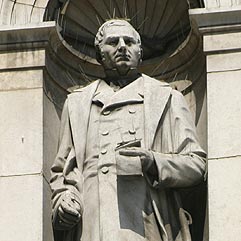
    Every Parisian has heard of "la rue Scribe", a street in the 9th arrondissement with the Garnier Opera just on the corner, in this busy "Grand Magasins" part of Paris. But who does it stand for?


    Augustin-Eugène Scribe was born on December 24, 1791. The son of a silk-merchant located on the street Saint-Denis in Paris (nowadays known as the "Sex shops street"), "Le Chat Noir", referring to two black cats sculptures, his father died as he was still in his craddle, as Eugène de Mirecourt mentions: "Scribe était encore au berceau que son père mourut". The house (picture left) was later transformed into a candy store and eventually destroyed in 1913.

    He was a good student, and met during that time the brothers Delavigne, Casimir and Germain, who would remain friends and collaborators throughout the years.
    "Il fit de bonnes et intelligentes études au collège Sainte Barbe (...) Eugène Scribe suivait les cours du lycée Napoléon (Henri IV), et il s'y lia d'une étroite amitié avec les frères Delavigne".
    Sainte-Beuve, Portraits contemporains, 1840


    "Monsieur Scribe" was a writer in every way you can think of: vaudevilles, more serious plays, novels, fiction books, and opera libretti (all in all more than 350 plays and libretti).
    As a matter of fact, he's probably the most prolific librettist of the XIXth century.


    His plays, first performed at the Théâtre du Gymnase, were then allocated to the Théâtre Français, before being part of the prestigious Comédie Française (after 1840). He was elected to the Académie Française on November 27 1834 and attributed the seat 13. He was also commandeur de la Légion d'Honneur, one of the highest distinctions in France.


    The "Parisian from Paris" as he liked to be called died in Paris (rue Pigalle) on Feb.20, 1861 while working on the libretto of Meyerbeer's L'Africaine, and is buried in the Père Lachaise cimetery in Paris.


    • Daniel François-Esprit AUBER
    • Vincenzo BELLINI
    • Gaetano DONIZETTI
    • Charles GOUNOD
    • Jacques HALEVY
    • Saverio MERCADANTE
    • Giacomo MEYERBEER
    • Jacques OFFENBACH
    • Gioacchino ROSSINI
    • Giuseppe VERDI
    • Ambroise THOMAS

    Seems like a list of all French and Italian opera composers between 1820 and 1860?
    Well, it's also the composers would had one or several librettos written by Eugene Scribe.

    So, let's look closer at Scribe's prolefic career.


    Paris Town Hall


    The style of Scribe, both in plays and libretti, is characterized by Sainte-Beuve as unique and with a great dramatic twist.
    "M. Scribe possède à la fois la fertilité dramatique et une forme qui n'est qu'à lui. Il a donc rang parmi nos poètes à aussi bon droit, je pense que s'il avait composé dans sa vie une couple de pièces en alexandrins."
    Sainte-Beuve, Portraits contemporains, 1840.

    Sainte-Beuve also emphasizes the great structure of the dramatic events in Scribe's work, especially his ability to have no more than 3 or 4 characters and yet still be able to avoid boredom at all time, although his frame consists of 4 or 5 situations for his entire work.
    "La vraie nouveauté dramatique de M. Scribe me paraît consister dans la combinaison et l'agencement des scènes; là est sa forme originale, le ressort vraiment distingué de son succès, là il a mis de l'art, de l'étude, une habilité singulière, et son invention porte surtout là-dessus. Il a su nouer avec 3 ou 4 personnages des comédies qui ne languissent pas un seul instant. (...) Son théâtre, à le bien analyser, se réduirait probablement à 4 ou 5 situations fondamentales, auxquelles il a mis toutes sortes de paravents et de toilettes diverses."
    Sainte-Beuve, Portraits contemporains, 1840.

    Of course not everybody agreed with that analysis.
    In L'Artiste, a newspaper about Arts and Literature, one can find this review of Scribe's lattest libretto, Le Lac des Fées (music by Auber, 1839): "Le nouveau livret de M. Eugène Scribe n'est pas meilleur que les autres livrets innombrables que nous avons du même auteur; n'était la crainte de paraître y attacher la moindre importance, nous dirions même qu'il est pire".
    My translation: "The lattest libretto of M. Eugène Scribe is no better than the numerous ones he already has written. Had we not been stopped by the fact we don't want to appear to care about it, we would even say it is worse."


    Scribe's libretti;
    • Adolphe-Charles ADAM
    Several librettos including Cagliostro and Giralda are available for free download here.

    - L'oncle d'Amérique, livret de Scribe en société avec* E.-J.-E. Mazères, créé au théâtre du Gymnase le 14 mars 1826
    - Le mal du pays ou La batelière de Brientz, opéra comique en 1 acte, créé au au théâtre du Gymnase à Paris le 28 décembre 1827
    - Le chalet, opéra comique en un acte, livret de Scribe et Mélesville, 1834 d'après Jery und Bätely de Goethe, qui atteindra les 1000 représentations à l'Opéra-Comique de Paris en 1873
    - Le fidèle berger, livret de Scribe et J.-H. Vernoy de Saint-Georges, créé à l'Opéra-Comique de Paris (Bourse), 6 janvier 1838
    - Régine ou Les deux nuits, opéra comique, créé à l'Opéra-Comique de Paris (Bourse), 17 janvier 1839
    - La reine d’un jour, livret de Scribe et Saint-Georges, créé à l'Opéra-Comique de Paris (Bourse), 19 septembre 1839
    - La main de fer ou Le mariage secret, livret de Scribe et de Leuven, créé à l'Opéra-Comique de Paris (Favart), 26 octobre 1841
    - Lambert Simnel (opéra commencé par H. Monpou), livret de Scribe et Mélesville, créé à l'Opéra-Comique de Paris (Favart), 14 septembre 1843
    - Cagliostro (livret de Scribe et Saint-Georges), créé à l'Opéra-Comique de Paris (Favart), 10 février 1844
    - Giralda ou la Nouvelle Psyché, opéra comique en 3 actes, (prévu pour Auber) créé à l'Opéra-Comique de Paris (Favart), le 20 juillet 1850

    • Giulio Eugenio Adramo ALARY
    - La beauté du diable, opéra comique en 1 acte, livret de Scribe et Emile de Najac, créé à l'Opéra Comique le 28 mai 1861

    • Daniel François-Esprit AUBER

    -La neige ou Le nouvel Eginhard, opéra comique en 4 actes, livret de Scribe et Germain Delavigne, créé à l'Opéra Comique le 9 octobre 1823
    - Leicester ou le chateau de Kenilworth, opéra comique en 3 actes, livret de Scribe et Mélesville, d'après Kenilworth de W. Scott, créé à l'Opéra Comique le 25 janvier 1823
    - Le concert à la cour ou La débutante, opéra comique, livret de Scribe et Mélesville, créé à l'Opéra Comique le 5 mai 1824
    - Léocadie, drame lyrique en 3 actes, livret de Scribe et Mélesville d'après La fuerza de la sangre de M. de Cervantes, créé à l'Opéra Comique le 4 novembre 1824
    - Les trois genres, prologue, livret de Scribe, Dupaty et M. Pichat, créé au théâtre de l'Odéon à Paris, le 27 avril 1824 [avec la collaboration de Boieldieu]
    - Le maçon, opéra comique en 3 actes, livret de Scribe et Germain Delavigne, créé à l'Opéra Comique le 3 mai 1825
    - Fiorella, opéra comique en 3 actes, créé à l'Opéra Comique le 28 novembre 1826
    - Le timide ou Le nouveau séducteur, opéra comique en 3 actes, livret de Scribe et Xavier Boniface Saintine, créé à l'Opéra Comique le 2 juin 1826
    - La muette de Portici, opéra en 5 actes, livret de Scribe et Germain Delavigne, créé à Opéra de Paris le 29 février 1828
    - La fiancée, opéra comique en 3 actes, d'après Les contes de l’atelier de M. Mason et R. Brucker, créé à l'Opéra Comique le 10 janvier 1829
    - Fra Diavolo ou L’hôtellerie de Terracine, opéra comique en 3 actes, créé à l'Opéra Comique le 28 janvier 1830
    - Le Dieu et la Bayadère ou La courtisane amoureuse, opéra ballet en 2 actes, créé à Opéra de Paris le 13 octobre 1830
    - Le philtre, opéra en 2 actes, créé à l'Opéra de Paris le 15 juin 1831
    - Le serment ou Les faux monnayeurs, opéra en 3 actes, livret de Scribe et E.-J.-E. Mazères, créé à l'Opéra de Paris le 1 octobre 1832
    - Gustave III ou le bal masqué, opéra historique en 5 actes, créé à l'Opéra de Paris le 27 février 1833
    - Lestocq L’Intrigue et l’Amour, opéra comique en 4 actes, créé à l'Opéra Comique le 24 mai 1834
    - Le Cheval de Bronze, opéra-féérie en 3 actes, créé à l'Opéra de Paris le 28 mars 1835 [révisé en opéra-ballet, créé à l'Opéra de Paris le 21 septembre 1857]
    - Actéon, opéra comique, créé à l'Opéra Comique le 23 janvier 1836
    - L’ambassadrice, opéra comique en 3 actes, livret de Scribe et Saint-Georges, créé à l'Opéra Comique le 21 décembre 1836
    - Les chaperons blancs, opéra comique en 3 actes, créé à l'Opéra Comique le 26 mars 1836
    - La fête de Versailles, intermède en deux parties, créé à Versailles le 10 juin 1837
    - Le domino noir, opéra comique en 3 actes, créé à l'Opéra Comique le 2 décembre 1837
    - Le lac des fées, opéra en 5 actes, livret de Scribe et Mélesville, créé à l'Opéra de Paris le 1er avril 1839
    - Zanetta ou Jouer avec le feu, opéra comique en 3 actes, livret de Scribe et J.-H. Vernoy de Saint-Georges, créé à l'Opéra Comique le 18 mai 1840
    - Les diamants de la couronne, opéra comique en 3 actes, livret de Scribe et Saint-Georges, créé à l'Opéra Comique le 6 mars 1841
    - Le duc d’Olonne, opéra comique en 3 actes, livret de Scribe et Saintine, créé à l'Opéra Comique le 4 février 1842
    - La part du diable, opéra comique en 3 actes, créé à l'Opéra Comique le 16 janvier 1843
    - La sirène, opéra comique en 3 actes, créé à l'Opéra Comique le 26 mars 1844
    - La barcarole ou L’Amour et la Musique, opéra comique en 3 actes, créé à l'Opéra Comique le 22 avril 1845
    - Haydée ou Le secret, opéra comique en 3 actes, d'après Six et Quatre de P. Mérimée, créé à l'Opéra Comique le 28 décembre 1847
    - L’enfant prodigue, opéra en 5 actes, créé à l'Opéra de Paris le 6 décembre 1850
    - Zerline ou La corbeille d’oranges, opéra en 3 actes, créé à l' Opéra de Paris le 16 mai 1851
    - Jenny Bell, opéra comique en 3 actes, créé à l'Opéra Comique le 2 juin 1855
    - Manon Lescaut, opéra comique en 3 actes, d'après A.-F. Prévost, créé à l'Opéra Comique le 23 février 1856
    - Marco Spada, opéra comique en 3 actes, livret de Scribe et Delavigne, d'après La confession du bandit de H. Vernet , créé à l'Opéra Comique le 21 décembre 1852 [révisé comme Marco Spada ou Le bandit, ballet en 3 actes, argument de J. Mazilier, créé à l'Opéra de Paris le 1er avril 1857
    - La Circassienne, opéra comique en 3 actes, créé à l'Opéra Comique le 2 février 1861
    - La fiancée du Roi de Garbe, opéra comique en 3 actes, livret de Scribe et Saint-Georges, créé à l'Opéra Comique le 11 janvier 1864

    • Michael William BALFE
    - Le puits d'amour, opéra comique en 3 actes, créé à l'Opéra Comique le 20 avril 1843; créé au Princess's de Londres le 14 Août 1843 sous le titre Geraldine or the lover's well
    - Les Quatre Fils Aymon, opéra en 3 actes,
    créé à l'Opéra Comique le 15 Juillet 1844; créé au Princess's de Londres le 20 novembre 1844 sous le titre The Castle of Aymon or The Four Brothers

    • François BAZIN
    - L'ours et le Pacha, opéra bouffe en 1 acte, livret de Scribe et Joseph Xavier Boniface Saintine, créé à l'Opéra Comique le 21 février 1870

    • Vincenzo BELLINI
    - La Sonnambula, opéra en 2 actes, livret de Felice Romani, d'après La Somnambule, pièce de Scribe et Germain Delavigne, créé au Teatro Carcano di Milano le 6 mars 1831

    • Louise BERTIN
    - Le loup-garou, opéra comique en 1 acte, livret de Scribe et Edouard-Joseph Mazères, créé à Paris en 1927

    • François-Adrien BOIELDIEU
    - Les trois genres, scène lyrique en 1 acte, livret de Scribe, Dupaty & M. Picha, créé au théâtre de l'Odéon (Paris) le 27 avril 1824 [collaboration avec Auber]
    - La Dame Blanche, opéra comique en 3 actes, d'après W. Scott, créé à l'Opéra-Comique de Paris le 10 décembre 1825
    - Les deux nuits, opéra comique en 3 actes, livret de Scribe & J.-N. Bouilly, créé à l'Opéra-Comique de Paris le 20 mai 1829
    - Marguerite, opéra comique en 3 actes, la maladie stoppera la composition de l'opéra (achevé en 1838 par son fils, Louis Boieldieu), créé à l'Opéra Comique le 18 juin 1838

    • Louis BOIELDIEU
    - L'opéra à la cour, opéra comique en 4 actes, livret de Scribe et Saint-Georges, créé à l'Opéra Comique (salle Favart) le 16 juillet 1840 [collaboration avec Grisar]

    • Dominique-François-Xavier BOISSELOT
    - Ne touchez pas à la Reine, opéra comique en 3 actes, livret de Scribe et G.Vaëz, créé le 16 Janvier 1847 à l' Opéra-Comique
    - Mosquita la sorcière, opéra en 3 actes, créé le 27 Sept. 1851 au Théâtre Lyrique

    • Luigi BORDESE
    - Le sultan saladin, opéra comique en 1 acte, livret de Scribe et Jean-Henri Dupin, créé à l'Opéra Comique le 8 février 1847

    • Ernest BOULANGER
    - Le Diable à l'école, légende en 1 acte, créé à l'Opéra Comique le 17 janvier 1842

    • Michele CARAFA DE COLOBRAO
    - Le Valet de chambre, opéra comique en 1 Acte, livret de Scribe et Mélesville, créé le 16 Septembre 1823 à l'Opéra Comique
    - La prison d'Edimbourg, opéra comique en 3 actes, livret de Scribe et Planard, créé à l'Opéra Comique le 20 juillet 1833
    • Francesco CILEA
    - Adriena Lecouvreur, livret d'Arturo Collauti d'après la pièce de Scribe et d'Ernest Legouvré (1849) Adrienne Lecouvreur, créé au Teatro Lirico di Milano le 6 novembre 1902

    • Antoine-Louis CLAPISSON
    - La Figurante ou L'Amour et la danse, opéra comique en 5 actes, livret de Scribe et Jean-Henri Dupin, créé le 24 Aôut 1838 à l'Opéra-comique
    - Le Code noir, opéra comique en 3 actes, créé le 9 Juin 1842 à l'Opéra-comique
    - Jeanne la folle, grand opéra en 5 actes, créé le 5 Nov. 1848 à l'Opéra de Paris
    - La Statue équestre, opéra comique en 3 actes, créé en 1850 à l'Opéra-comique
    - Les mystères d'Udolphe, opéra comique en 3 actes, livret de Scribe et Germain Delavigne, créé le 4 Nov. 1852 à l'Opéra-comique
    - Les Trois Nicolas, opéra comique en 3 actes, livret Scribe, Bernard Lopez et Gabriel de Lurieu), créé le 16 Décembre 1858 à l'Opéra Comique
    - Madame Grégoire ou La Nuit du mardi-gras, opéra comique en 3 actes, livret de Scribe et Henri Boisseau, créé le 8 Février 1861 à l'Opéra Comique

    • José Melchior Gomis COLOMER
    - Le Portefaix, opéra comique en 3 actes, créé à Paris en 1834

    • Pierre-Louis DEFFES
    - Broskovano, opéra comique en 2 actes, livret de Scribe et Henri Boisseaux, créé au Théâtre Lyrique le 29 septembre 1858
    - Les petits violons du roi, opéra comique en 3 actes, livret de Scribe et H. Boisseaux, créé au Théâtre Lyrique le 30 septembre 1859

    • Gaetano DONIZETTI
    - L'Elisir d'Amore, mélodrame en 2 actes, livret de Felice Romani, d'après la pièce de Scribe Le Philtre, créé au Teatro della Canobbiana, Milano le 12 mai 1832
    - Les Martyrs (version française de Poliuto), grand opéra en 4 actes, livret d'après la pièce de Corneille Poyeucte, créé à l'Opéra de Paris le 10 avril 1840 avec Gilbert Duprez dans le rôle de Polyeucte
    - La Favorite, opéra en 4 actes, livret de Scribe, Royer et Vaëz, créé à l'Opéra de Paris le 2 décembre 1840
    - Dom Sébastien de Portugal, grand opéra en 5 actes, livret de Scribe et Paul Henri Fouchers (composé par Donizetti en 1843 à Vienne et Paris), créé à l'Opéra de Paris le 13 Novembre 1843; créé en allemand au Kärntnertortheater de Vienne le 6 février 1845 sous le titre Dom Sebastian
    - Le duc d'Albe, grand opéra en 4 actes, livret de Scribe et Charles Duveyrier, opéra composé en 1839, créé le 22 mars 1882 au Teatro Apollo de Rome en italien (Il Duca d'Alba)


    • Gilbert-Louis DUPREZ
    - La lettre au bon Dieu, opéra comique en 2 actes, livret de Scribe et F. de Courey, créé à l'Opéra Comique le 28 avril 1853

    • Alphone de FELTRE
    - Le fils du prince, opéra comique en 2 actes, créé à l'Opéra Comique le 28 août 1834

    • François-Joseph FETIS
    - La Vieille, opéra comique en un acte, livret de Scribe et Germain Delavigne, créé à l'Opéra Comique le 14 mars 1826

    • Manuel del Pópolo Vicente GARCIA
    - La meunière, opéra comique, 1823

    • Charles GOUNOD
    - La nonne sanglante, opéra en 5 actes, livret de Scribe et Germain Delavigne, créé le 18 octobre 1854 à l'opéra de Paris

    • GUENEE
    - La chambre à coucher ou Une demi-heure de Richelieu, opéra comique en 1 acte, créé à l'Opéra Comique le 29 avril 1813
    [NB. 1er livret de Scribe]

    • Jacques HALEVY
    - Manon Lescaut, ballet en 3 actes, argument de Scribe & J. Aumer d'après Prévost, créé à l'Opéra de Paris le 3 mai 1830
    - La Juive, opéra en 5 actes, créé à l'Opéra de Paris le 23 février 1835
    - Guido et Ginevra, ou La peste de Florence, opéra en 5 actes, créé à l'Opéra de Paris le le 5 mars 1838 [révision en 4 actes, créé à l'Opéra de Paris le , 23 octobre 1840]
    - Les treize, (opéra comique en 3 actes, livret de Scribe & Duport, créé à l'Opéra-Comique de Paris (Salle de la Bourse) le 15 April 1839
    - Le shérif, opéra comique, livret e, 3 actes, d'après Honoré de Balzac, créé à l'Opéra-Comique de Paris (Salle de la Bourse) le 2 septembre 1839
    - Le drapier, opéra en 3 actes, livret de Scribe, créé à l'Opéra de Paris le 6 janvier 1840
    - Le guitarrero, opéra comique en 3 actes, créé à l'Opéra-Comique de Paris (Salle Favart), le 21 janvier 1841
    - La fée aux roses, opéra-comique en 3 actes, livret de Scribe & Saint-Georges, créé l'Opéra-Comique de Paris (Salle Favart) le 1 er octobre 1849
    - La dame de pique, opéra-comique en 3 actes, créé à l'Opéra-Comique de Paris (Salle Favart) le 28 décembre 1850
    - Le tempestà, opéra italien en 3 actes, livret de Giannone & Scribe, d'après William Shakespeare, créé à Londres au «Her Majesty’s Theater» le 8 juin 1850
    - Le Juif errant, opéra en 5 actes, livret de Scribe & Saint-Georges d'après Eugène Sue, créé à l'Opéra de Paris le , 23 avril 1852
    - Le nabab, opéra-comique en 3 actes, livret de Scribe & Saint-Georges, créé l'Opéra-Comique de Paris (Salle Favart) le 1er septembre 1853

    • Ferdinand HEROLD
    - La Somnambule ou L'Arrivée d'un nouveau seigneur, ballet pantomime en 3 actes, argument de Scribe et Aumer, créé le 19 Septembre 1827 à l'Opéra de Paris
    - La Belle au bois dormant, ballet pantomime en 4 actes, argument de Scribe et Aumer, créé le 27 Avril 1829 à l'Opéra de Paris
    - La marquise de Brinvilliers, drame lyrique en 3 actes, livret de Scribe et Casil-Blaze, créé à l'Opéra Comique le 31 Octobre 1831 [collaboration avec Auber, Désiré Alexandre Batton, Berton, Giuseppe Marco Maria Blangini, Boieldieu, Carafa, Cherubini et Paer]
    - La Médecine sans médecin, opéra comique en 1 acte, livret de Scribe et Jean François Alfred Bayard, créé le 15 Octobre 1832 à l'Opéra-Comique

    • Aristide Jean Louis HIGNARD
    - Le nouveau Pourceaugnac, opéra comique en 1 acte, livret de Scribe et Charles-Gaspard Delestre Poirson, créé au Théâtre des Bouffes-Parisiens le 14 janvier 1860

    • Charles-Frédéric KREUBE
    - La Redingote et la perruque, opéra en 3 actes, créé le 25 Janvier 1815 [collaboration avec Rodolphe Kreutzer]
    - Le Paradis de Mahomet ou La Pluralité des femmes , opéra en 3 actes, livret de Scribe et Mélesville, créé le 23 mars 1822 [collaboration avec R. Kreutzer]
    - La Lettre posthume, livret de Scribe et Mélesville d'après Walter Scott, opéra en 1 acte créé le 24 Avril 1827

    • Théodore François Joseph LABARRE
    - Le ménestier ou Les deux duchesses, opéra comique en 3 actes, créé à l'Opéra Comique le 9 août 1845

    • Armand Marie Ghislain (baron de) LIMNANDER (de Nieuwenhove)
    - Yvonne, opéra comique en 3 actes, créé à l'Opéra Comique le 29 novembre 1859

    • Marco Aurelio MARLIANI
    - La Xacarilla, opéra en 1 acte, créé à l'Opéra de Paris le 28 octobre 1839

    • Victor MASSE
    - La chanteuse voilée, opéra comique en 1 acte, 1850
    - La Fiancée du diable, opéra en 3 actes, livret de Scribe et Hippolyte Romand, 1854

    • Jacques-Féréol MAZAS
    - Le Kiosque, opéra comique en 1 acte, livret de Scribe et Paul Eugène Duport, créé à l'Opéra Comique (salle Favart) le 3 novembre 1842

    • Saverio MERCANDATE
    - Il reggente, livret de Salvatore Commarano, d'après le livret de Scribe Gustave III ou Le Bal Masqué (écrit pour Auber), créé au Teatro Regio di Torino le 2 février 1843

    • Giacomo MEYERBEER
    - Robert le Diable, opéra en 5 actes, 1831
    - Les Huguenots, opéra en 5 actes, livret de Scribe et Emile Deschamps, 1836
    - Le Prophète, opéra en 5 actes, 1849
    - L'Etoile du Nord, opéra comique en 3 actes, 1854
    - L'Africaine, grand opéra en 5 actes, livret achevé par François-Joseph Fétis après la mort de Scribe en 1861, 1865

    • Alexandre MONTFORT
    - Polichinelle, opéra comique en 1 acte, livret de Scribe et Ch. Duveyrier, créé à l'Opéra Comique le 14 juin 1839
    - La charbonnière, opéra comique en 3 actes, livret de Scribe et Mélesville, créé à l'Opéra Comique le 13 octobre 1845

    • Alexandre PICCINI
    - La petite lampe merveilleuse, opéra comique en 1 acte, livret de Scribe et Mélesville, créé au théâtre du Gymnase le 29 juillet 1822

    • Jacques OFFENBACH
    - La chatte métamorphosée en femme, pièce de vaudeville écrite par Scribe en 1827, retravaillée en livret 1858
    - Barkouf, opéra bouffe en 3 actes, livret de SCribe et H.Boisseaux, créé au théâtre des Bouffes-Parisiens le 24 décembre 1860

    • Melle Loïsa PUGET
    - Le mauvais oeil, opéra comique en 1 acte, livret de Scribe et Gustave Lemoine (mari de L.Puget), créé à l'Opéra Comique le 1er octobre 1836

    • Napoleon Henri REBER
    - La nuit de Noël ou L'anniversaire, opéra comique en 3 actes, créé à l'Opéra Comique le 9 février 1848

    • Giacchino ROSSINI
    - Le Comte Ory, opéra comique en 2 actes, livret de Scribe et Charles-Gaspard Delestre-Poirson, créé à l'Opéra de Paris le 20 Août 1828

    • Alphonse THYS
    - Oreste et Pylade, opéra comique en 1 acte, livret de Scribe et H.Dupin, créé à l'Opéra Comique le 28 février 1844
    [NB. A.Thys est un des crateurs de la SACEM en 1851]

    • Giuseppe VERDI
    - Les vêpres siciliennes, opéra en 5 actes, livret de Scribe et Charles Duveyrier, créé à l'Opéra de Paris 13 juin 1855
    - Un Ballo in Maschera, opéra en trois actes sur un livret d'Antonio Somma d'après le livret de Scribe Gustave III ou le Bal Masqué (écrit pour Auber), créé au théâtre de l'Apollo à Rome le 17 février 1859

    • Ambroise THOMAS
    - Le Comte de Carmagnola, opéra en 2 actes, créé à l'Opéra de Paris le 19 Avril 1841


    Scribe's quotes:

    - "Les petits cadeaux entretiennent l'amitié. Le premier qui a dit cela voulait se faire donner quelque chose."
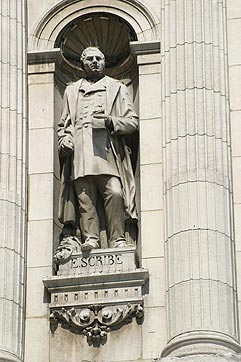
    - "Le plus riche est celui qui a le moins de désirs.", Les Indépendants


    Scribe, by Ernest Legouvé
    From his autobiography, Soixante ans de souvenirs, chapter 11, here


    Bibliography:

    Adolphe Adam, Daniel Auber, François Boieldieu, Jacques Halévy, oeuvres d'Eugène Scribe, Ferdinand Herold, Operone.

    * : selon la formule de l'époque